


As AI brings new possibilities to all corners of society, The Hong Kong Polytechnic University is at the forefront of digital advances in disciplines such as the humanities, languages, health, neuroscience and history
Sponsored by: Faculty of Humanities at The Hong Kong Polytechnic University
The Hong Kong Polytechnic University (PolyU) is an innovative, world-class university with more than 85 years of rich heritage. It aims to nurture socially responsible professionals and leaders and pursue world-leading research and innovation for societal benefits, in line with the university’s motto: “To learn and to apply, for the benefit of mankind.” Through cutting-edge research that brings together the humanities and modern technology, PolyU’s impact stretches beyond Hong Kong.
Building on forward-looking initiatives at the university, the Division of Artificial Intelligence and Humanities in PolyU’s Faculty of Humanities – set to launch in January 2026 – will serve as a catalyst for the Faculty’s transition towards AI integration, bridging technological expertise with the full spectrum of humanities disciplines.
AI and language technologies
A key research priority for the Faculty of Humanities is using generative AI to advance language research and education. The large language model (LLM) experts at the university are looking at the extent to which language informs our conceptual representation of the world.
“Humans comprehend language by integrating words, sentences and the broader narrative context,” says Ping Li, Sin Wai Kin Foundation professor in humanities and technology and dean of the Faculty of Humanities at PolyU. Li and his team explored next sentence prediction (NSP), revealing that LLMs trained on NSP match human brain activity more closely. This improves AI’s text comprehension and offers insights into how the brain processes language and discourse.



Academics at PolyU are also looking to the gaming world to help bridge cultural and language gaps. Black Myth: Wukong is a popular action role-playing game inspired by a classical Chinese novel. LLMs can help game developers to better localise the material for international audiences, according to Emmanuele Chersoni, assistant professor in the Department of Language Science and Technology at PolyU.
“LLMs augmented with the capacity of retrieving information from domain ontologies can help improve the translation quality in the localisation process,” Chersoni says. “They could also generate explanation materials for the players who would like to know more about the lore of a game and its cultural background.”
AI for neuroscience and healthcare
Research teams in the Faculty of Humanities are looking at the applications of generative AI in neuroscience. Hualou Liang, chair professor of neuroscience and AI in PolyU’s Department of Language Science and Technology, has been exploring projects at the intersection of AI and brain science. He has developed machine learning methods to analyse large-scale neuroscience data, build data-driven foundation models of the brain, and use AI and natural language processing in healthcare.
One notable research project looks at how LLMs can be used to predict dementia based on speech, enabling early screening and diagnosis of Alzheimer’s disease. LLMs are able to detect changes to the way people talk and behave, building predictive models to quantify the risk of Alzheimer’s.
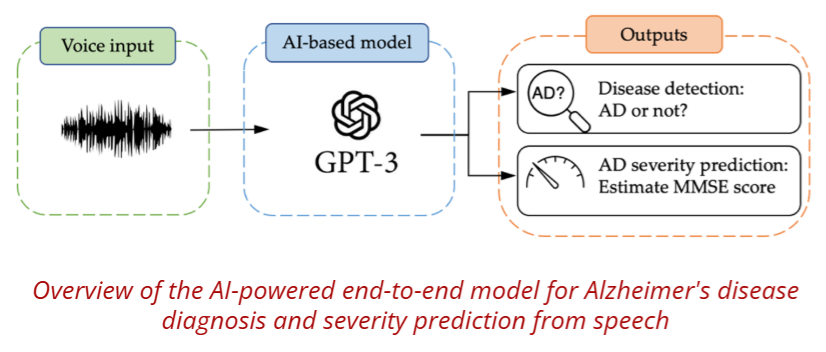
“Conventional, clinic-based methods for early diagnosis are expensive, time-consuming and impractical for large-scale screening,” Liang explains. “We are aiming to discover cost-effective and user-friendly biomarkers such as speech, signalling cognitive impairment and integrating these biomarkers into effective machine learning models for early detection of cognitive decline.” This project has received international acclaim, featuring in over two dozen journals and media platforms across the world.
Neurolinguistics and brain-language interface
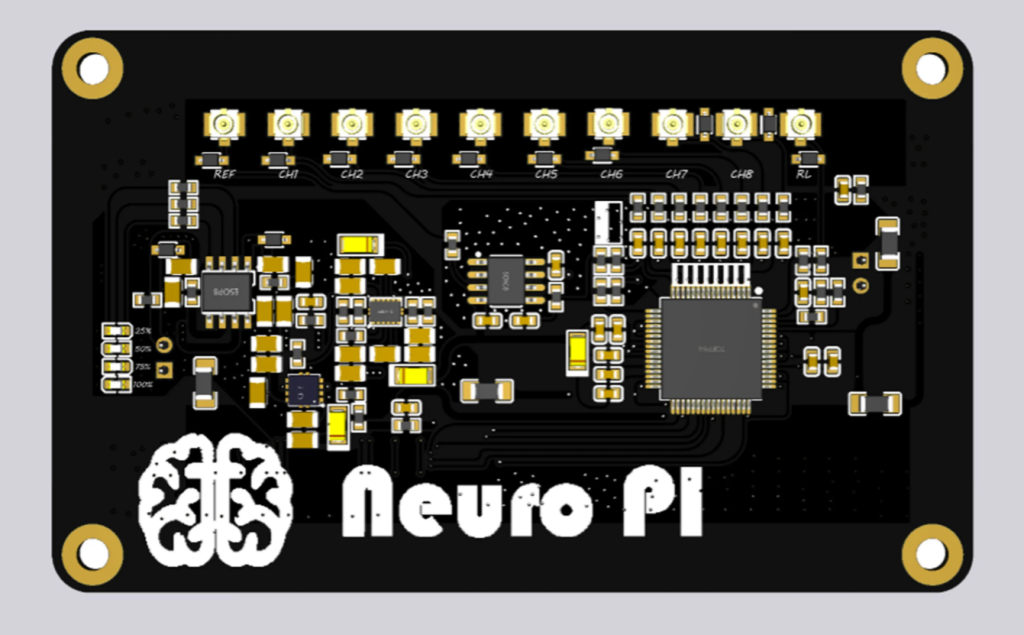
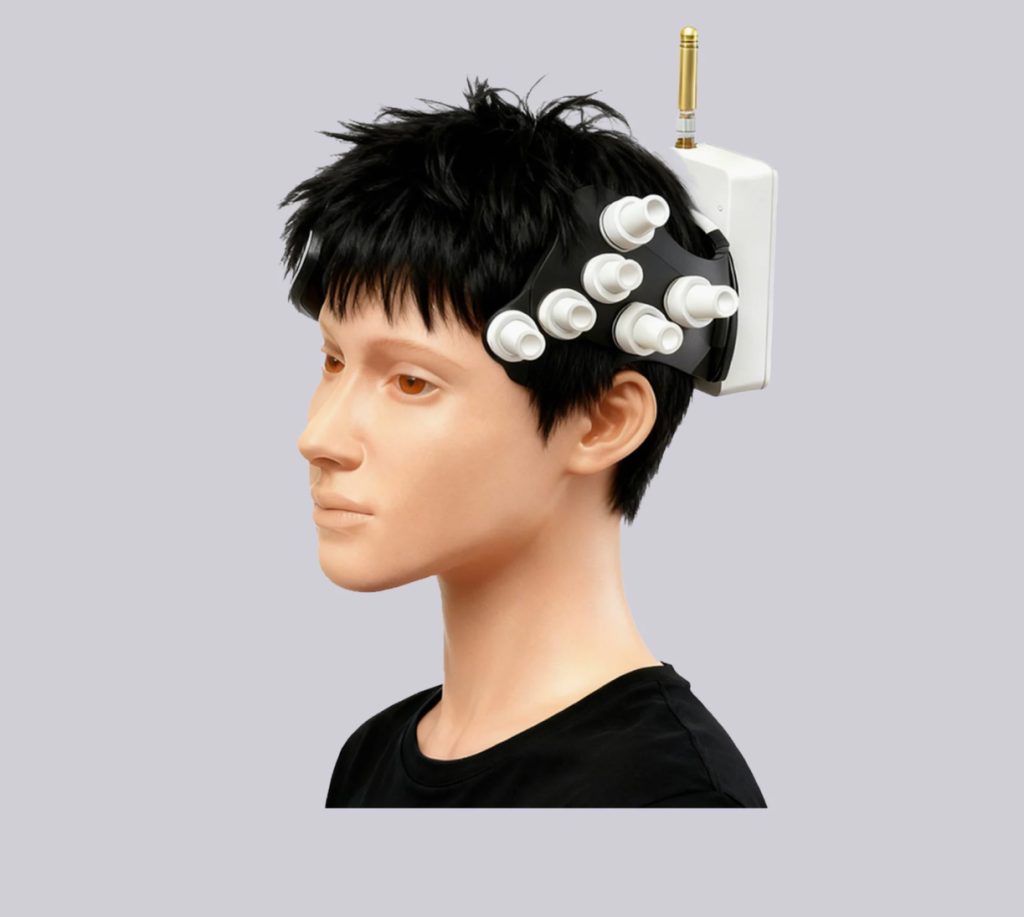
NeuroVoice is a brain-computer interface application designed to enhance communication for people with speech impairments, developed by Wai Ting Siok, professor and head of the Department of Language Science and Technology at PolyU, and Nizhuan Wang, research assistant professor in the department. The application represents a significant advancement in assistive technology that can help individuals with aphasia, a language disorder that affects an individual’s ability to speak.
NeuroVoice is made up of two key components – a wearable device that monitors language-related brain regions and an analysis platform that takes the data from the device for interpretation and real-time visualisation. The research project investigates how to optimise the device’s design to produce the optimal signals and data from the brain.
By deploying the AI-based BrainVoicer model, the application can detect and decode neural activity and “translate” it into speech and text. Together, these elements create an integrated platform that supports clinical interventions for aphasia and contributes to foundational research in neurolinguistics, cognitive neuroscience and language-related disorders.
Technology-assisted speech therapy
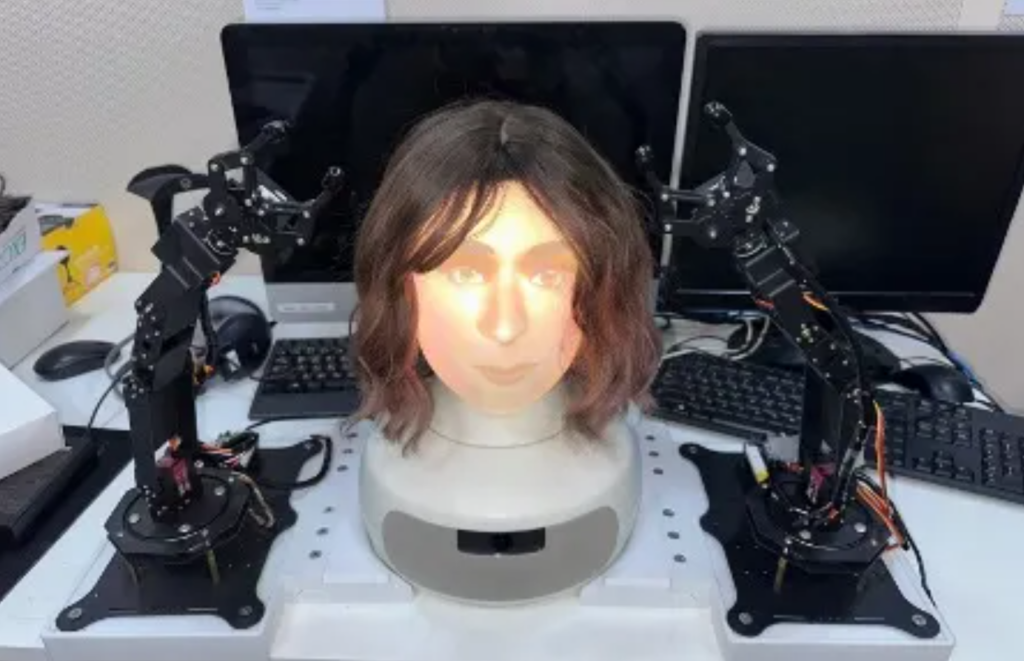
Children with autism may find human interactions challenging due to their unpredictability. Interactions with robots, in contrast, can be more consistent. A research team, led by Si Chen, assistant professor in the Department of Language Science and Technology at PolyU, uses robotic technology to create interventions that enhance speech prosody and emotion recognition. The project combines generative AI, augmented reality and robotics to simulate situations and create a rich interactive experience for users.
The technology can help children with autism build confidence in social scenarios by practising speech and communication skills. “By simulating social interactions, we control specific training cues and present multimodal information step by step, including dynamic facial expressions, gestures, speech and music,” Chen says. “It allows us to provide personalised training to foster communication skills tailored for each child and offer rich, adaptive training materials based on their performance.”
Technology-enhanced language learning
Learning logic is essential for developing knowledge and the quality of logic in argumentative writing. Learners do this through a number of steps, including gathering knowledge, understanding concepts and analysing logic. Generative AI can help not only accelerate this process, but also make it more personalised and adaptive, according to Di Zou, associate professor in the Department of English and Communication at PolyU.
AI can analyse performance in real time, giving customised explanations and instant feedback. With this in mind, Zou and her research team have created a tool called LogicalHamster, a GPT-4-based AI tutor that engages students in discussions so they can improve their argumentative writing.
“It delivers targeted instruction and immediate feedback to help learners. Mixed-methods evaluation showed gains in logic knowledge, writing skills, self-efficacy and motivation,” says Zou. She believes that future language education will be shaped by immersive, AI-driven feedback and building culturally adaptive AI tutors that can tailor learning to different backgrounds is important.
Digital humanities
Digital humanities play a crucial role in helping future generations understand complex cultural and historical pieces of art and literature. The Department of Chinese History and Culture at PolyU has established a digital database of 100 poetry anthologies produced in early modern China, between the 14th and 17th centuries.
“Editors and scholars compiled thousands of anthologies of classical Chinese poems from this period, which are preserved today as woodblock prints and manuscripts,” says Jing Chen, assistant professor in the Department of Chinese History and Culture. “Through conducting archival research and using advanced computational tools, our team has built a large-scale database that digitalises and analyses the rich metadata in these collections – especially paratexts such as tables of contents and prefaces.”
The team has also developed three digital tools that allow scholars to search across anthologies and create visualisations of poem-poet-book networks so they can compare similarities, she says. “By transforming metadata into structured digital resources and building new innovative digital tools, our project preserves China’s poetic heritage for future generations and enables cutting-edge scholarship in digital humanities, print culture and Chinese literature.”
Find out more about the Faculty of Humanities at The Hong Kong Polytechnic University.